Cortina 1956
Live on Air
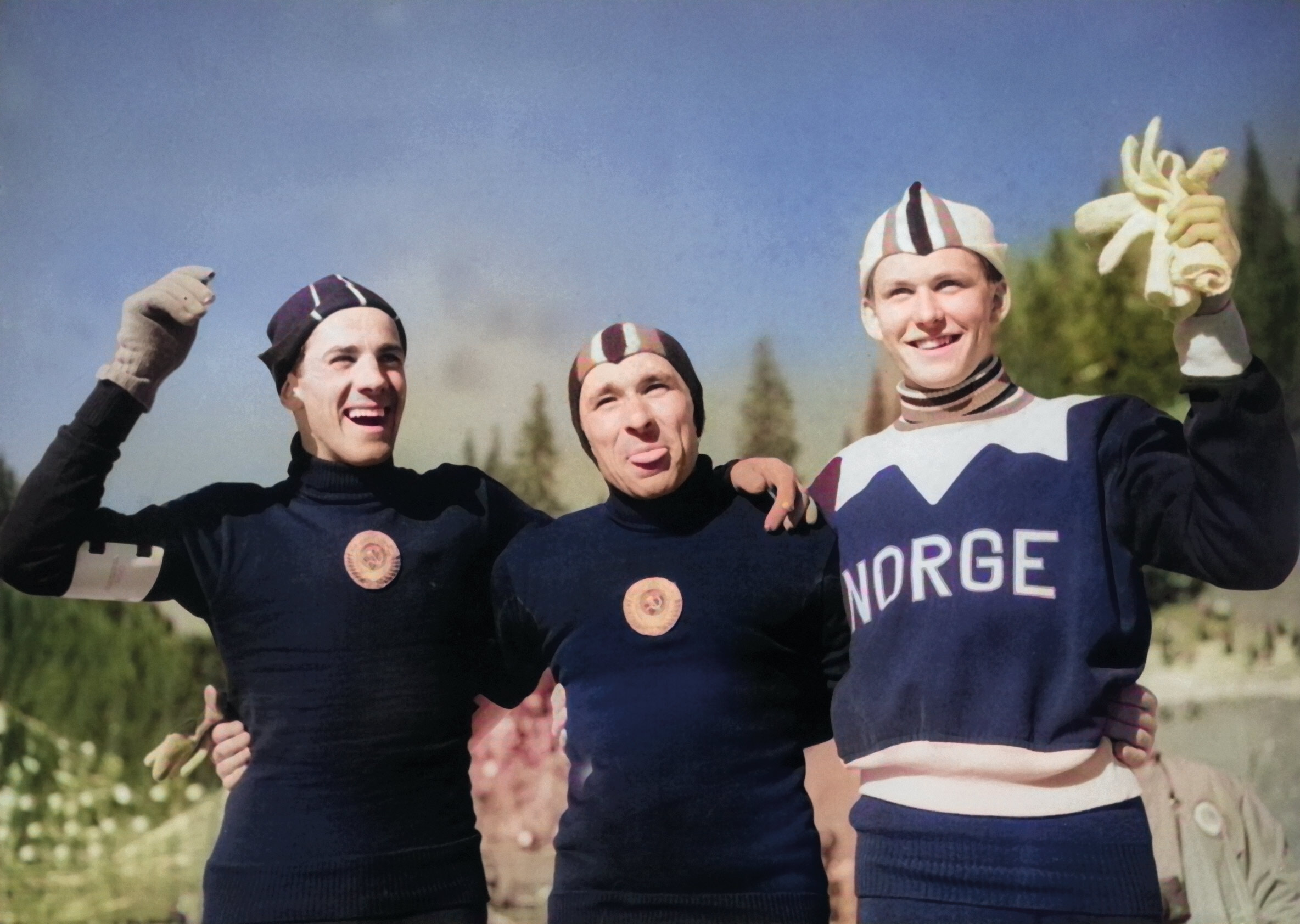
The 1956 Winter Games were the first to be broadcast on television on a large scale. Live images from the Dolomites flickered across television screens in several European countries. Comfortably seated in their living rooms, TV audiences were able to watch the competitions and the opening ceremony, at which a woman took the Olympic oath for the first time – Italian ski racer Giuliana Minuzzo. However, the pitfalls of technology soon became apparent: speed skater Mario Caroli, who carried the Olympic torch into the stadium, tripped over a television cable. Technical innovations can also be observed among the ski jumpers: some of them refrain from stretching their arms forward and instead place them at their sides – a posture that enables longer jumps and ends the Olympic winning streak of the Norwegian jumpers. Gold goes to Finland's Antti Hyvärinen, silver to his compatriot Aulis Kallakorpi, and bronze to Harry Glaß from Saxony – the first German Olympic medal in ski jumping. In alpine skiing, the young Toni Sailer from Kitzbühel dominates the Games: with three gold medals, he becomes a national hero in his homeland and finally establishes Austria as a skiing nation. Politically, the Games were marked by the Cold War: the Soviet Union took part in the Winter Games for the first time and promptly dominated the medal table, while athletes from the Federal Republic of Germany and the GDR competed together for the first time in a unified German team. Cortina thus stood for technical innovation, media premieres, national icons, and global political tensions – and finally established the Winter Games as a global event.
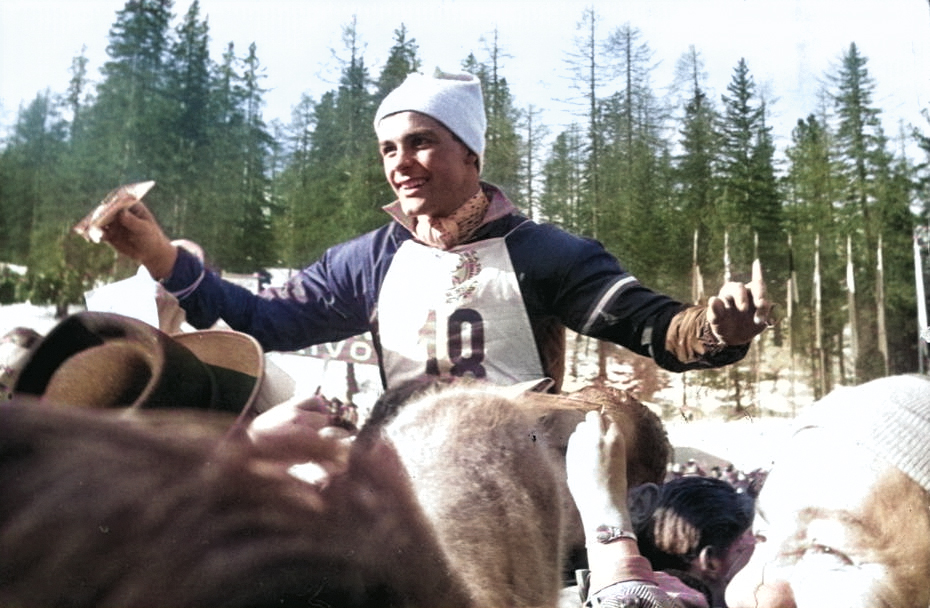
Toni Sailer
Toni Sailer (1935–2009) was an Austrian ski racer and the country's first great winter sports hero in the 1950s. He made history in Cortina d'Ampezzo by becoming the first alpine skier to win gold in the downhill, giant slalom, and slalom. After his active career, Sailer switched to entertainment as an actor and singer. He later returned to skiing, among other things as head coach and technical director of the Austrian Ski Association (1972–1976) and as race director of the Hahnenkamm races in Kitzbühel (1986–2006).
- Besuch planen Alle Infos rund um den Besuch
- Führungen Direkt online buchen
- Eintritt Tickets kaufen
- Museumsshop Unser Online-Shop
- Event & Location Alle Infos für die Planung Ihrer Veranstaltung
