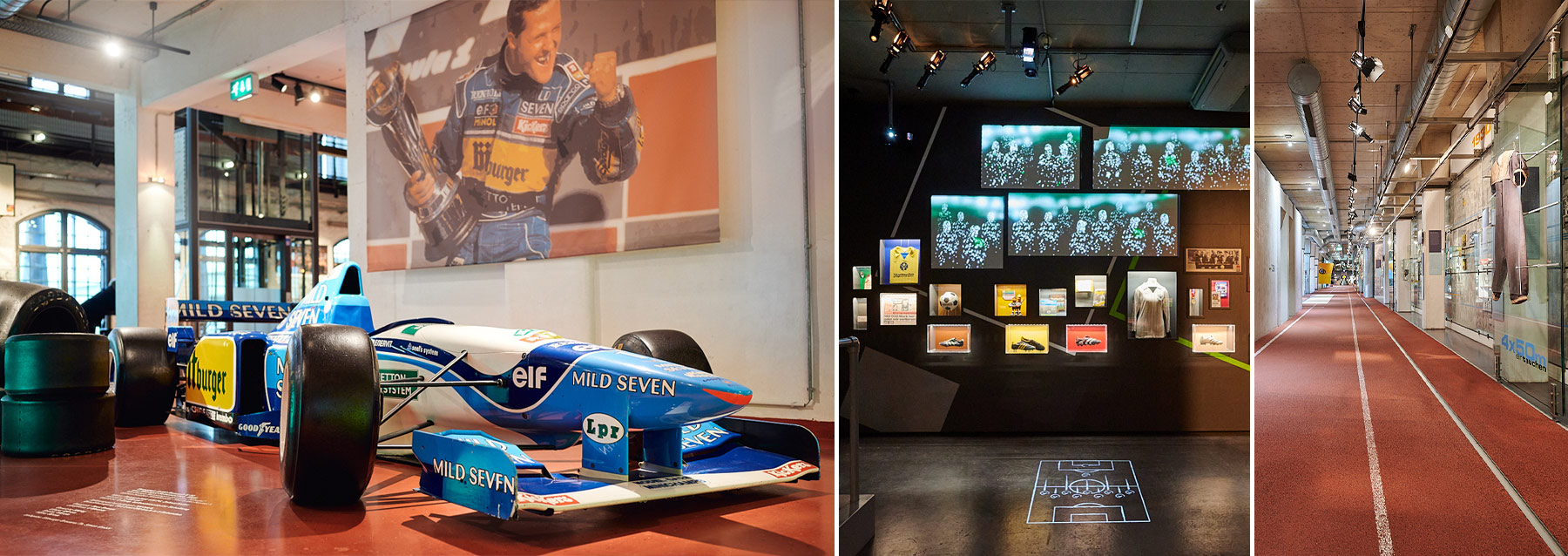
The picture is divided into three parts. On the left side is a Formula 1 car. There are tires arranged around the car. A screen hangs on the wall. On the screen, Michael Schumacher can be seen holding a trophy. In the background are large windows and an elevator. The center of the picture shows the soccer room. Various exhibits are displayed on the wall. For example, there is a jersey, soccer cleats, and pictures. On the right side of the picture is a wall with a timeline of the Olympic Games. On the wall are various facts about the Olympic Games. There are various exhibits on the wall. One exhibit we can see is an old swimsuit. The floor is a running track and extends to the end of the permanent exhibition.

Permanent Exhibition

The German Sport & Olympia Museum presents a wide range of insights into the fascinating world of sport from antiquity to the present day over an area of more than 2,000 m². An exciting and interactive journey through 2,500 years of sports history - with unique exhibits and inspiring themed rooms as well as numerous activity stations.

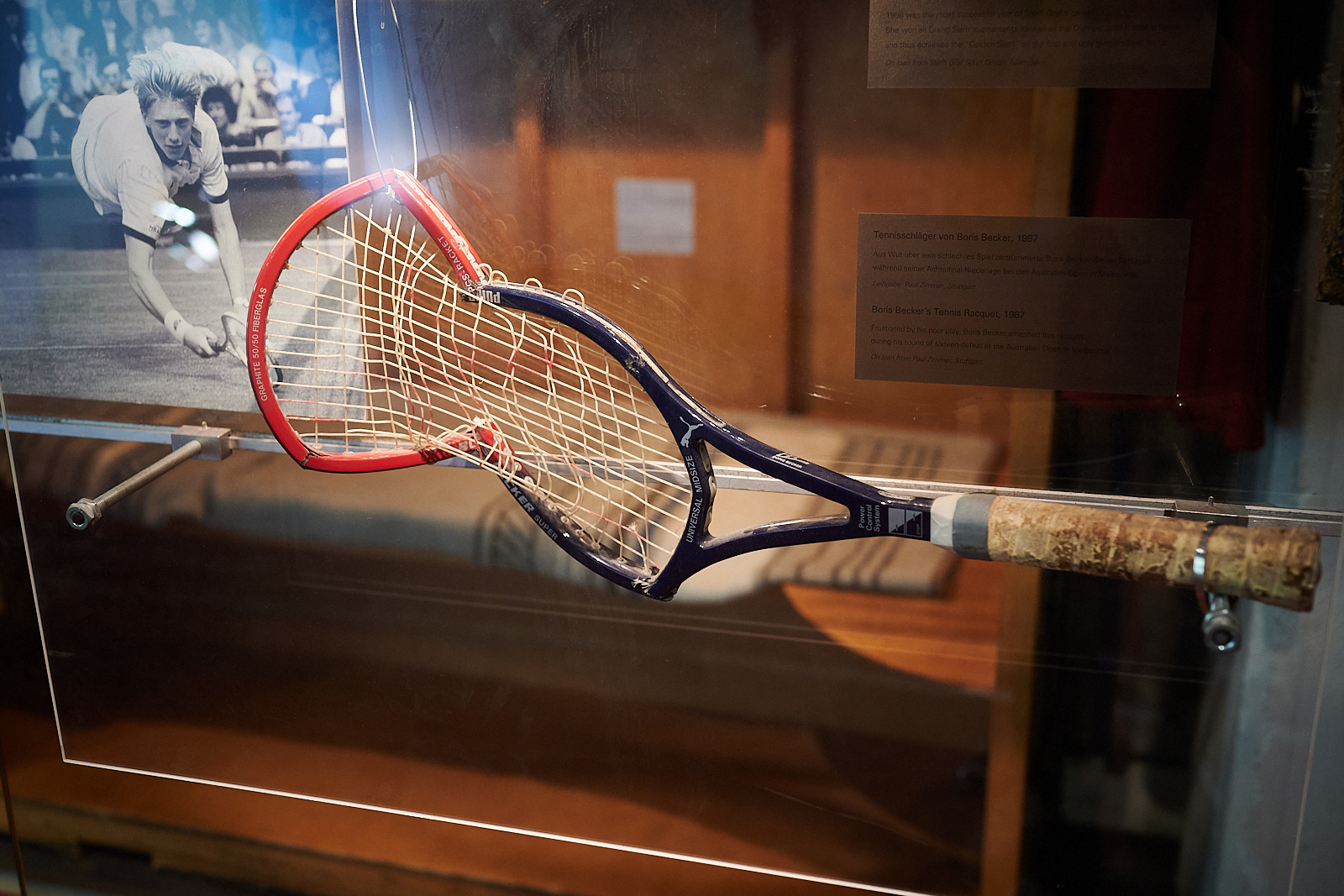
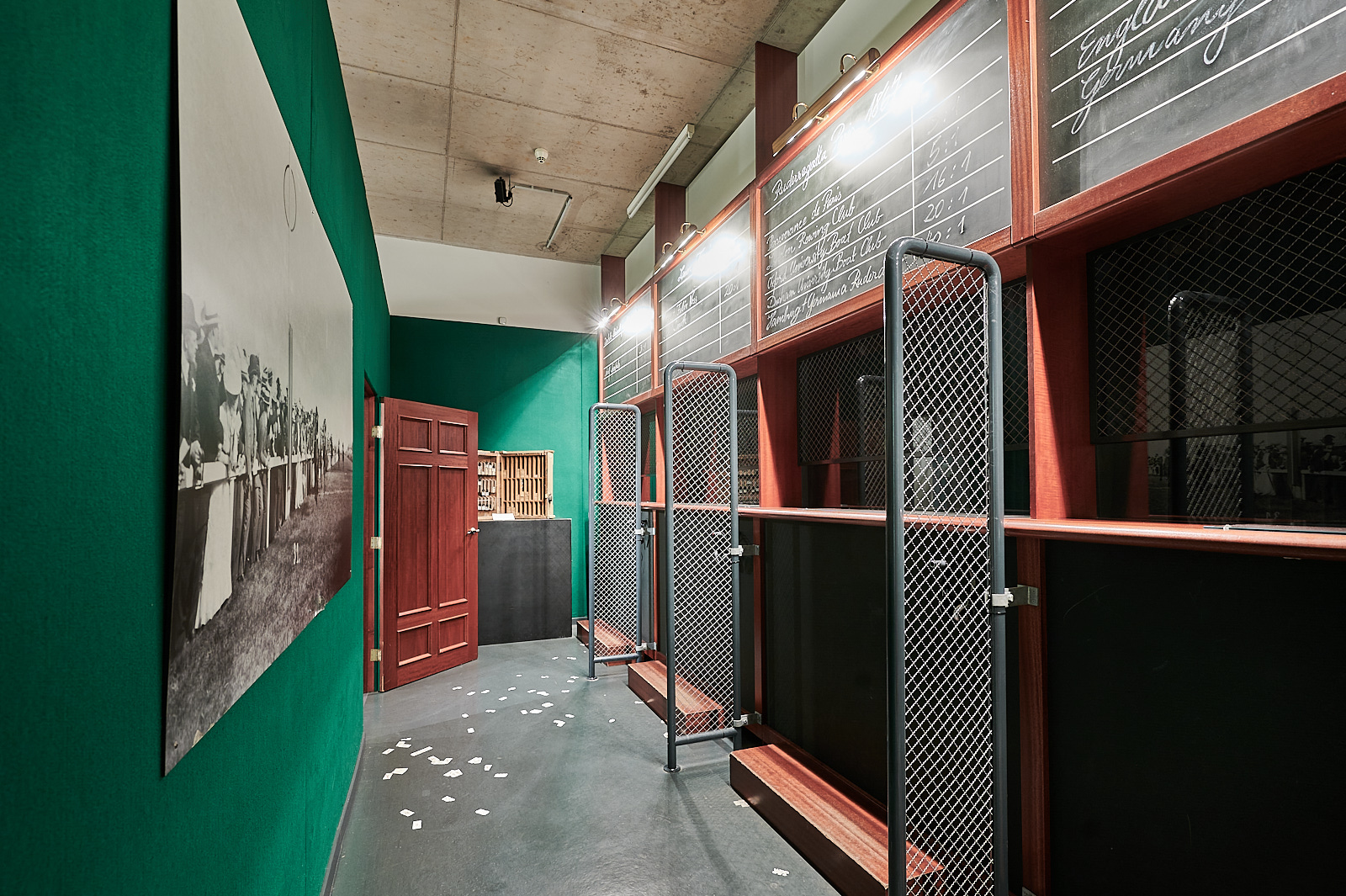
For example, you can marvel at Muhammad Ali's hand-signed boxing gloves, a Formula 1 racing car driven by Michael Schumacher, the tracksuit and a top of the 1972 Olympic champion Ulrike Meyfarth, who was only 16 at the time, a tennis racket smashed in anger by Boris Becker, a perfectly preserved one by Steffi Graf, a prosthesis by multiple Paralympics winner and world record holder Markus Rehm, the oversized basketball shoes of Dirk Nowitzki - and much, much more. For example, a wonderful model of the ancient Olympia, a replica of an English betting office, a boxing ring or Lukas Podolski's football boots.

Thus, great moments of sport are staged, impressive victories and painful defeats, historical events such as the Olympic Games of 1936 and 1972 in Berlin and in Munich or unforgettable Olympic and world champions. The values of sport, such as fairness and mutual respect, as well as its ability to bring people together across borders, are also highlighted. And by no means are the risks and side effects left out, for example doping.

So, we would like to extend a very warm invitation to  anyone who wants an exciting, stimulating insight in into the history and current issues and topics of one of the most important cultural phenomenon of our time.
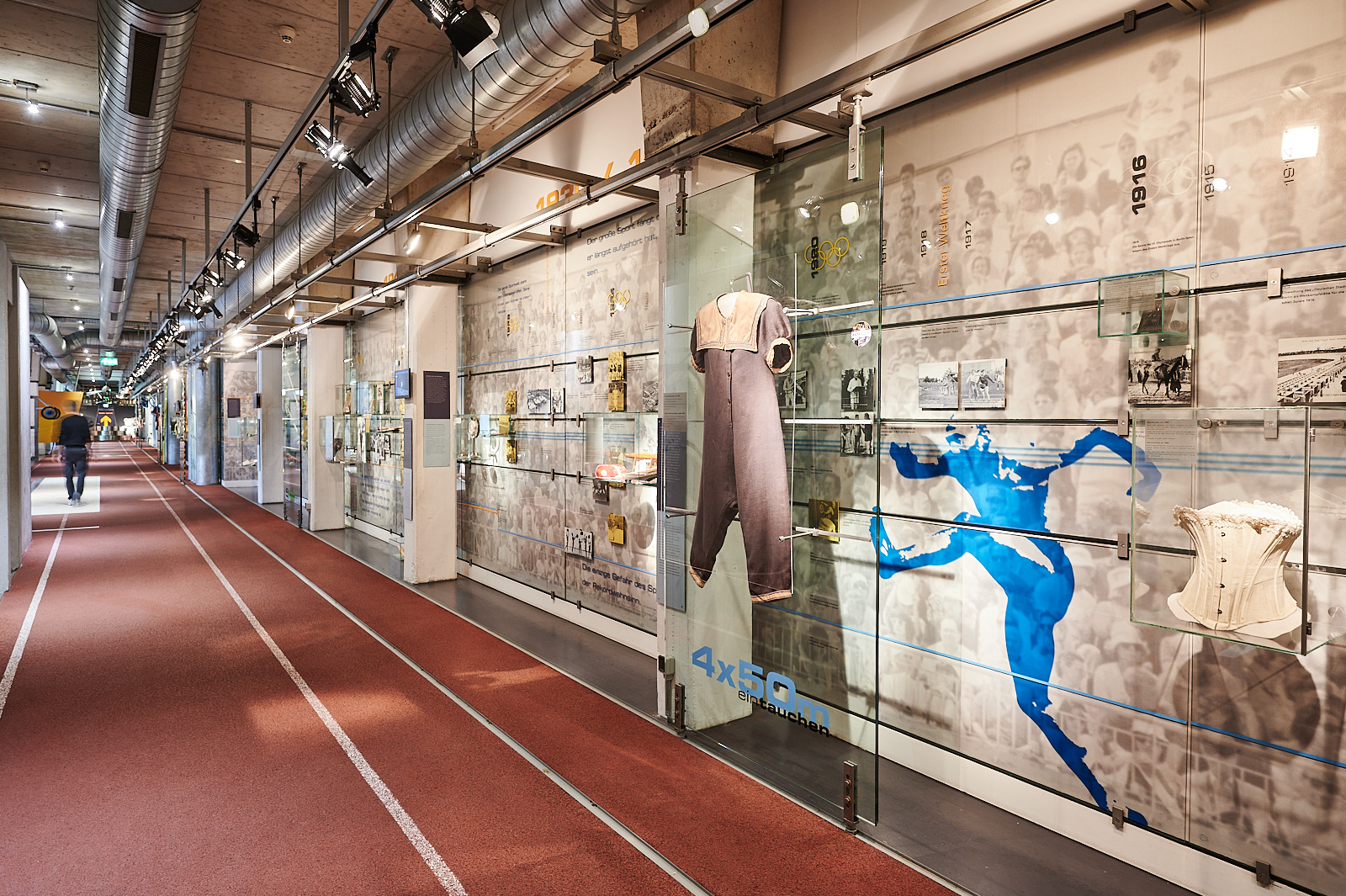
  • This photo was taken in the permanent exhibition. We can see part of the permanent exhibition. In front of us is the Olympic Games timeline. Along the timeline are various exhibits and explanations. Among other things, the photo shows an old swimsuit. In the background of the timeline, we can see a blue figure. Next to the timeline, the floor is a running track.
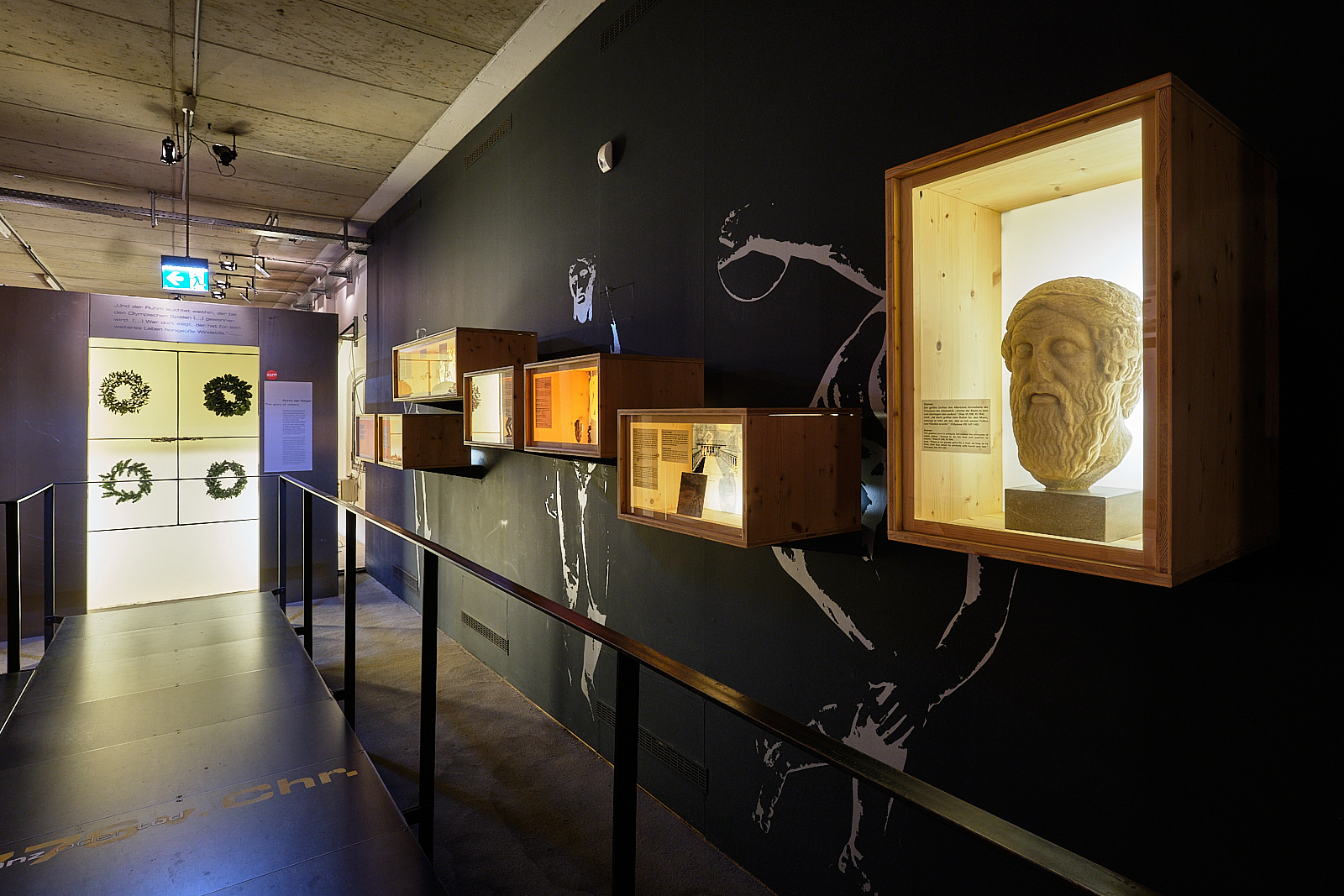
  • The photo shows the entrance to the permanent exhibition. Various exhibits from antiquity are on display. Several display cases containing various exhibits are mounted on the wall. In the first display case, we see a head. Further back, there are various wreaths.
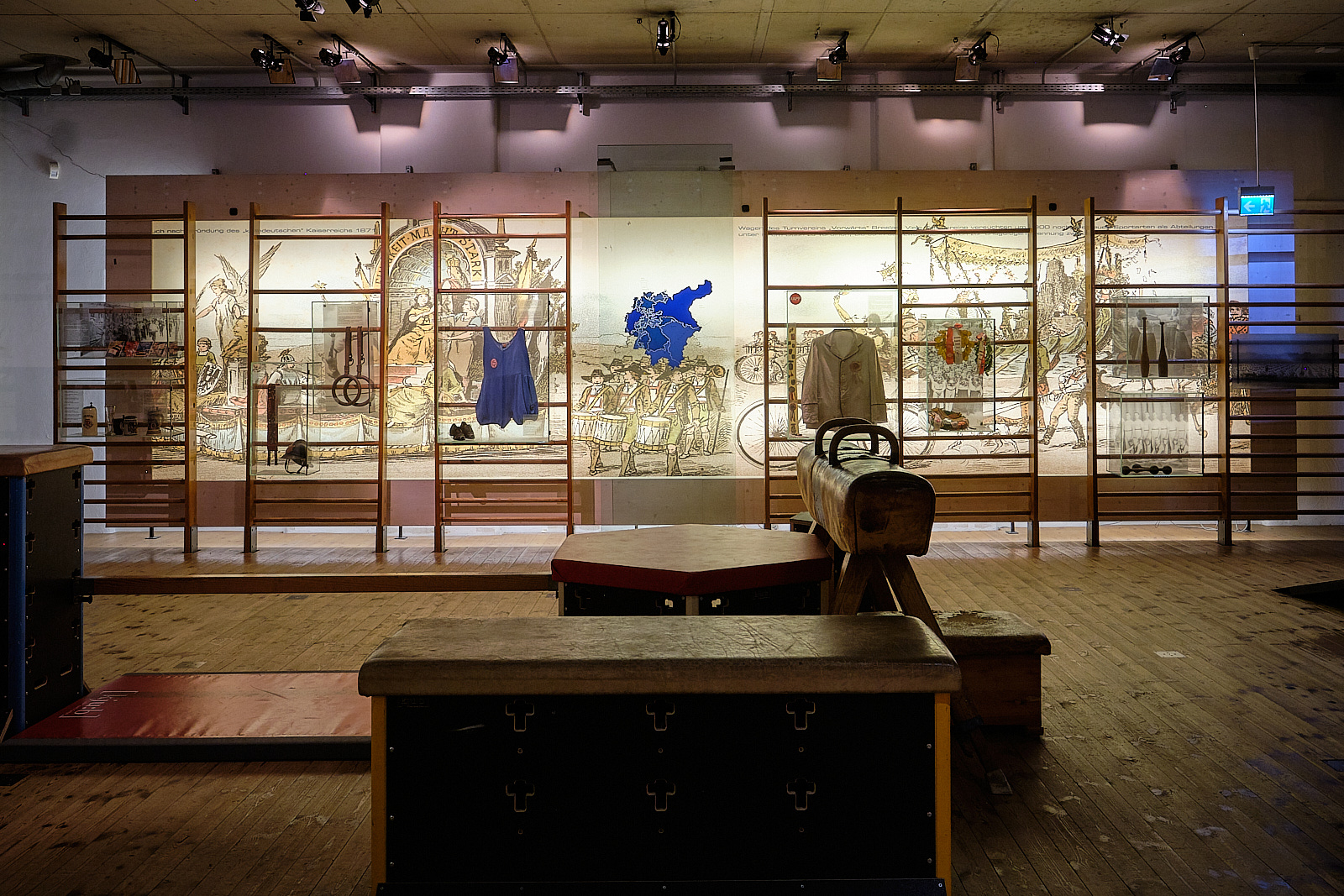
  • The photo was taken in the gymnastics corner. The gymnastics corner is dedicated to Turnvater Jahn. You can see exhibits on the wall and various wall bars. Only a few lights are on, but the wall is illuminated. There is also various gymnastics equipment in the room.
  • In the photo, you can see a tennis racket. It is Boris Becker's tennis racket. The tennis racket is broken. Next to the racket hangs a picture of Boris Becker. The racket has been attached to a glass pane. Next to the racket is another picture of Boris Becker.
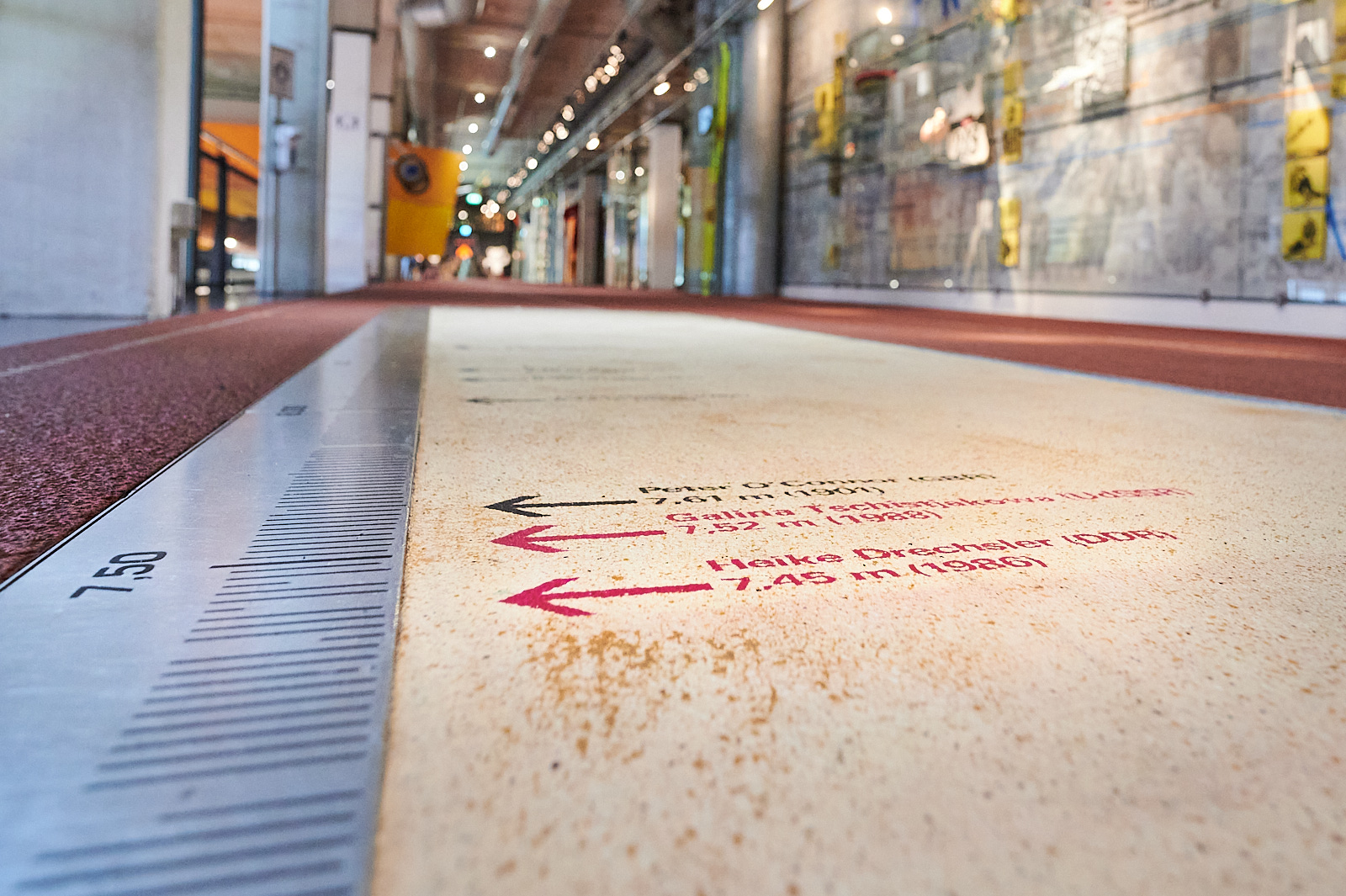
  • In the photo, we see a sandpit—but it’s made of stone. There are various markings on the stone. The markings indicate the distance that someone jumped. Three different distances are marked in the photo. In the background, you can see the timeline and other parts of the permanent exhibition.
  • The photo was taken in an old betting shop. It is a small room with three booths. The room depicts a betting shop from the past. Old betting slips are scattered on the floor. The room is green.
Open today: